Shopping for or listing a lake home in Reynolds Lake Oconee? The dock is often as important as the house, yet permits and terminology can feel confusing. This guide breaks down the dock types you will see, practical size and material choices, and how Georgia Power’s shoreline authorizations work so you can plan with confidence. Let’s dive in.
Dock options on Lake Oconee
Fixed docks
Fixed docks are rigid structures set on piles or columns in the lakebed. They keep a steady deck height, which many people like for a solid feel and easy access. You often see them where water depth is steady and wave action is modest.
- Pros: Stable underfoot, durable for heavy loads, and a good base for wider decks or roofed elements if allowed.
- Cons: Higher cost to install, more lakebed impact, and less forgiving when water levels change.
Floating docks
Floating docks sit on buoyant modules, so they rise and fall with the lake. They are common on Lake Oconee because seasonal water levels can change. They are typically easier and faster to install.
- Pros: Adaptable to water level changes, often less invasive to the lakebed, and generally cost less to install.
- Cons: Can feel less stable in rough water, may drift if not anchored well, and floats can require replacement over time.
Hybrid systems
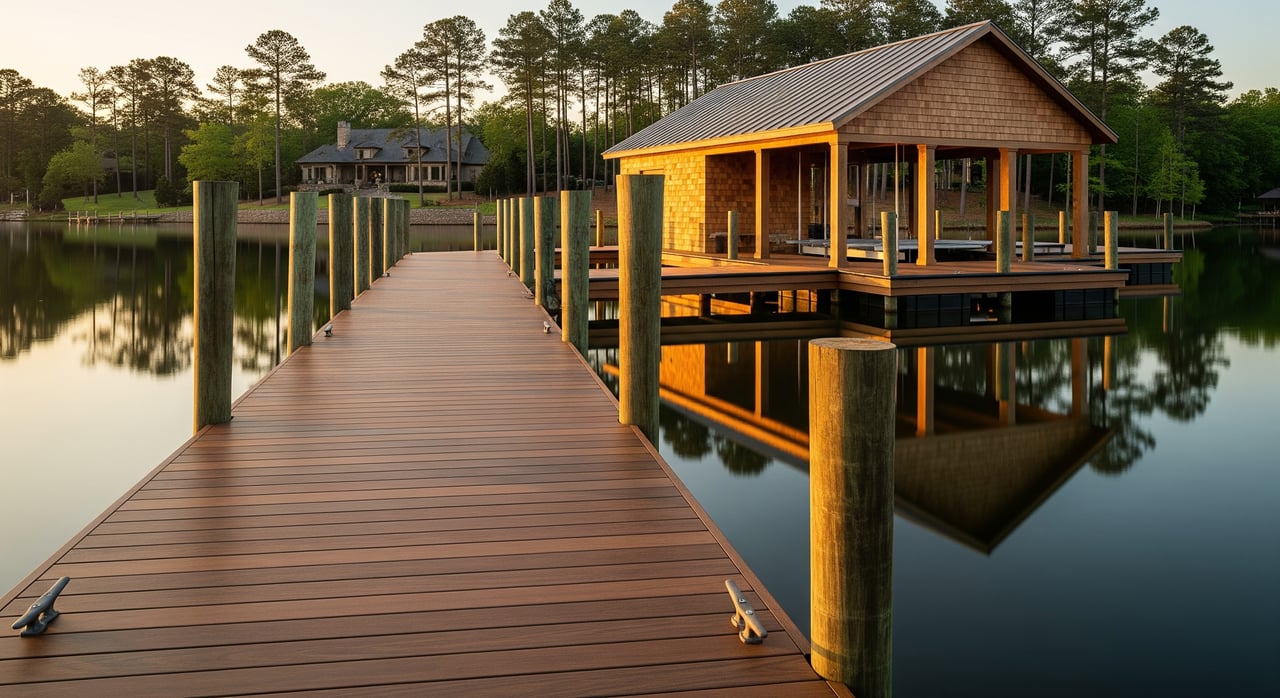
Some properties combine a fixed access walkway with a floating platform at the end. Others use pile-supported sections with floating slips. Hybrids aim to balance on-deck stability with adaptability to water levels, especially where the shoreline is shallow and then drops off.
Covered structures and lifts
Boat lifts, canopies, and boathouses are popular features, but they are regulated differently than open docks. On Lake Oconee, authorizations can vary for open docks versus covered docks or enclosed boathouses. Whether you can add a roof or an enclosed structure depends on specific policies, your lot, and location on the shoreline.
Typical sizes and layout basics
While every lot is different, you will commonly see walkways in the 4 to 8 foot range, with main walkways on higher-end builds running 8 to 12 feet. Fingers or slips are often 4 to 8 feet wide, and total length can range from about 30 to more than 100 feet depending on water depth and use. These are common practices, not regulatory limits. Actual allowable sizes and layout are set by Georgia Power and, in many cases, by Reynolds community standards or county rules for your specific parcel.
Materials and maintenance
Common choices include pressure-treated wood, cedar or hardwoods, composite decking, aluminum framing, and plastics for floats. Wood offers a classic look but needs periodic sealing and repairs. Composites and aluminum often mean higher upfront cost with lower maintenance. Make sure materials align with community standards and the look you want.
Who approves docks at Reynolds
Georgia Power Shoreline Management
Lake Oconee is a Georgia Power reservoir. The Georgia Power Shoreline Management Program issues shoreline authorizations for docks, lifts, boathouses, and stabilization work. These authorizations govern use of the lakebed and immediate shoreline and are separate from county permits. Authorizations are site-specific, include conditions, and often have renewal or transfer steps.
Federal and state review
The U.S. Army Corps of Engineers may require a federal permit if your project disturbs the lakebed, touches wetlands, or installs structures below the ordinary high water line. The Georgia Environmental Protection Division may be involved through water quality certifications tied to federal permits. Many small residential projects can qualify for streamlined federal pathways, but you should not assume this without formal confirmation.
County and community rules
Greene County may require building or zoning permits and inspections. Reynolds Lake Oconee has community design standards and approval processes that can affect dock size, materials, and appearance. Owners often need both Georgia Power authorization and HOA approvals, so plan for more than one approval track.
How to work with Georgia Power
Step-by-step roadmap
Preliminary information: Confirm the parcel and owner, and gather existing dock documents, surveys, and any Georgia Power authorization numbers. Ask the Reynolds community for applicable dock design rules and prior approvals.
Contact Georgia Power early: Reach out to the Shoreline Management team to confirm whether an authorization exists for the lot and to learn current application requirements and fees.
Assess the site and plan: Get a recent boundary survey with the shoreline and pool elevation. Prepare a simple plan showing the dock footprint, dimensions, materials, water depth, and distance to neighboring structures. Decide on fixed or floating, lifts or canopies, and any needed utilities.
Submit your application: Complete Georgia Power’s shoreline authorization application. Include your survey, drawings, photos, contractor details, and any requested HOA approvals. If you expect lakebed disturbance or wetland impacts, consult the U.S. Army Corps of Engineers and Georgia EPD in parallel.
Review and conditions: Expect a review period. You may receive conditions that govern timing, markers, roof restrictions, or maintenance obligations. Pay any required application or license fees.
Build and document: Construct exactly as authorized. Keep thorough records and be ready for pre or post inspections if required.
Buyers confirm transfer: If you are buying a property with a dock, obtain the authorization paperwork and confirm whether it transfers or needs a new application. Start this process before contingencies expire.
Smart due diligence for buyers and sellers
- Authorization status: Confirm a current Georgia Power shoreline authorization exists for the dock and get a copy. Read the conditions carefully.
- Built to plan: Verify the dock matches the authorized plans and photos. A quick site visit or inspection report can save surprises later.
- Other approvals: Ask about any federal or state permits and community or county approvals, and obtain copies.
- Transfer rules and fees: Ask Georgia Power if a transfer or reauthorization is required at sale and whether fees apply.
- Condition and safety: Have a qualified dock or marine contractor estimate remaining life and costs for floats, decking, pilings, electrical, and lift systems.
- Erosion and water levels: Review shoreline stability and how seasonal water levels affect access and boat draft at your lot.
- Insurance and liability: Confirm coverage with the current owner’s insurer and what you will need as the next owner.
- Title and easements: Make sure no recorded easements conflict with dock placement or access.
Common pitfalls and pro tips
- Do not assume an existing dock is authorized. Always obtain written Georgia Power documentation and confirm it is current and compliant.
- Expect multiple approvals. Georgia Power authorization is primary, but county, community, and sometimes federal or state signoffs can apply.
- Plan for time. Simple floating docks tend to move faster than boathouses or projects involving shoreline stabilization. Start early in your transaction timeline.
- Use experienced local contractors. Teams familiar with Georgia Power and Reynolds requirements can help avoid design revisions and delays.
- Keep everything on file. Authorization documents and amendments are valuable during resale and for future projects.
Getting started at Reynolds Lake Oconee
A well-planned dock adds real value to a Reynolds Lake Oconee property, but the right path starts with Georgia Power authorization and clear community approvals. Decide on your dock type, confirm the rules for your lot, and build a clean paper trail you can carry into closing. If you want help coordinating next steps or a quick gauge of market value, get your instant home valuation or connect with the local team that knows the shoreline rules and lifestyle details that matter most. Reach out to Madison Reed to get started.
FAQs
How do Lake Oconee dock permits work at Reynolds?
- Georgia Power’s Shoreline Management Program issues authorizations for docks and shoreline structures, often alongside Reynolds HOA and county approvals, and sometimes federal or state permits depending on the scope.
What dock type fits Lake Oconee water levels?
- Floating docks are common because they adjust with seasonal water changes, while fixed docks suit sites with steady depth and lighter wave action if allowed.
Can I add a boathouse at Reynolds Lake Oconee?
- Boathouses and covered docks face stricter rules than open docks, and approval depends on your specific lot, location, and current Georgia Power and community policies.
How long does Georgia Power approval take?
- Timelines vary by project complexity; simple docks may move faster, while boathouses or in-water work can take longer, so contact Shoreline Management early for guidance.
What should buyers verify before closing on a dock?
- Confirm a current Georgia Power authorization, check that the dock matches approved plans, collect any federal, state, county, and HOA approvals, and clarify transfer steps and fees.